
Publications

Searching for Innovation? Look North!
A year into the COVID-19 pandemic, Canada is looking for paths forward to build back better. After a year of invaluable lessons learned, what do we know? What do we want to strengthen? What are we willing to change? What are the assets and building blocks for a stronger future?

According to Atlantic Employers
What did a survey of over 800 Atlantic employers tell us about their outlook and activities to drive business growth before COVID-19? Explore our findings in five thematic reports and what it means for supporting employers as economies rebuild.

Go Big, or Go Home? Refocusing Entrepreneurship for Productive & Inclusive Growth
Entrepreneurship has been called the backbone of the economy. Despite the popularity of hoodie-wearing CEOs and global tech innovations, broad-based entrepreneurship that fuels local productivity and helps solve real-world problems has declined across developed nations. Canada is no exception. COVID-19 has added to the challenge. As Canada recovers, how do we get entrepreneurship back on track?

Report 3: Do Vaccine Brand Preferences Exist?
Canada has approved four COVID-19 vaccines for use and secured access to more vaccine doses per person than any other country. With such a wide array of vaccines likely to be made available to them, Canadians’ preferences on which vaccine they receive could have a big impact on the vaccination campaign. With data from the Media Ecosystem Observatory, Dr. Peter Loewen breaks down what Canadians consider most important in a vaccine, and which vaccines they prefer.
Place-Based Policy Options for Entrepreneurship in a Post-COVID Canada
As Canadians look forward to the economic recovery and governments herald a new normal, few signals have been given about its policy landscape, and even fewer about the role of small business and entrepreneurs in the post-COVID strategy. With the horizon now in sight, how can governments move quickly to put a shot in the arm of small businesses and entrepreneurs that are operating in disparate and localized challenges and conditions?
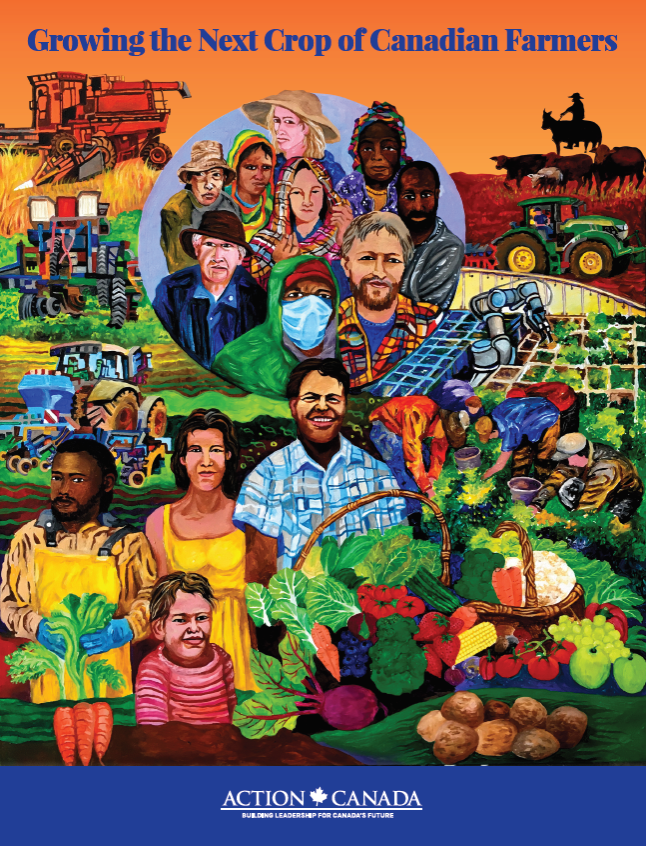
Growing the Next Crop of Canadian Farmers
The COVID-19 pandemic has highlighted fundamental gaps in our agricultural system. For the first time in generations, many Canadians saw empty grocery store shelves and became acutely aware of the challenges facing our domestic food system. What followed were COVID-19 outbreaks on farms and meat processing plants and temporary foreign workers who were delayed and stranded. The pandemic highlights vulnerabilities in Canada’s food supply-chain and the importance of a resilient agricultural sector.
Let’s build a better Canada together. Whether you’re looking to support our mission by becoming a member, partnering with us on a project or sponsoring an event, your engagement helps drive informed, inclusive policy across the country.

A Platform Economy Strategy for Canada: Supporting place-based governance for a more resilient and inclusive post-COVID Future of Work
Advances in big data, algorithms and cloud computing over the past decade have contributed to the emergence and widespread use of digital platforms in Canada. Whether it be through Uber, Airbnb, Amazon, Etsy or Shopify, a growing number of Canadian workers and businesses are interacting in these platform-based and controlled markets. This phenomenon, known as the emergence of the Platform Economy, has significant implications for the Future of Work in Canada. Meanwhile, the COVID-19 pandemic has only accelerated this trend as more Canadians than ever before turn towards digital platforms to support their livelihoods.

Carbon Capture, Utilization and Storage — The Time is Now
This paper reflects a strong consensus within the Energy Future Forum that any achievable pathway to national climate and economic objectives must include a significant contribution from carbon capture technologies and from utilization and storage. In any post-COVID, “green stimulus” planning, support for CCUS expansion is even more pivotal than before.

Report 2: Support for a Canadian “Vaccine Passport”
"Support for a Canadian 'Vaccine Passport'" is the second piece in a six-part series focused on attitudes about COVID-19, vaccine hesitancy, public trust and support for government, and how this is all changing over time. The project is authored by Dr. Peter Loewen and is based on data collected by the Media Ecosystem Observatory (MEO).

Sustainable Finance 2
Canada has been trailing behind global developments in sustainable finance, though serious work – particularly in the private and not-for-profit sectors – is underway to develop and implement plans that support a sustainable outcome. If the sustainable finance market is to expand, Canada must provide comprehensive data and information and also offer policy and regulatory certainty for both providers and users. This report offers recommendations in four key areas.

Fault Lines and Common Ground
What divides urban and rural voters? What unites them? In this second report on the Urban-Rural divide in Canada, Sean Speer and his team take a closer look at the Canadian Election Study and find that urban and rural Canadians have divergent opinions on many key issues, but they also agree to a large extent on many others. As populism grows across the western world, policymakers in Canada need to understand the implications.

Perceptions and Polarization
Political polarization is growing across the globe. In this first report on the urban-rural divide in Canada, Sean Speer teams up with Peter Loewen and the University of Toronto’s Policy, Elections and Representation Lab (PEARL) to explore the theory that a “perception gap” exists between those who live in cities, the suburbs and rural communities. How do Canadians' distorted beliefs of one another’s circumstances fuel polarization?

Recommendations to Strengthen Canada’s Response to New Digital Technology and Reduce the Harm Caused by their Misuse
How can we create a vibrant digital public sphere that doesn’t by design expose people to an ocean of baser instincts — much less to hatred and abuse? The Citizens’ Assembly on Democratic Expression explores the question of online harms, as Canadians spend more and more time on the Internet, particularly in the COVID-19 pandemic. These 42 members, randomly selected from a pool of volunteers, who we hope represent the widest possible range of voices and perspectives, come together to provide 33 recommendations that balance the harms of misuse of technology with freedom of speech.

Harms Reduction: A Six-Step Program to Protect Democratic Expression Online
The health of our democracy ultimately depends on citizens having the capacity, willingness and opportunity to participate in our public life. Following nine months of study and deliberations, the Canadian Commission on Democratic Expression has settled on a six-part, made-in-Canada plan to address hate speech and other online harms, while balancing freedom of speech.

Report 1: The Waiting is the Hardest Part
“The Waiting is the Hardest Part” is the first piece in a six-part series focused on attitudes about COVID-19, vaccine hesitancy, public trust and support for government, and how this is all changing over time. The project is authored by Dr. Peter Loewen and is based on data collected by the Media Ecosystem Observatory (MEO).