
Media
Harms Reduction: A Six-Step Program to Protect Democratic Expression Online
The health of our democracy ultimately depends on citizens having the capacity, willingness and opportunity to participate in our public life. Following nine months of study and deliberations, the Canadian Commission on Democratic Expression has settled on a six-part, made-in-Canada plan to address hate speech and other online harms, while balancing freedom of speech.


Processes, People and Public Accountability
Researchers and reporters documented three forms of harmful online communication during Canada’s 2019 federal election campaign: abuse of individuals, intolerance and hate toward marginalized groups in public online spaces, and an increase in support for hate in private online spaces. In this report, authors Heidi Tworek and Chris Tenove propose a framework to distinguish key dimensions of harmful online communication in Canada, and offer several principles to guide policy development in Canada.

The Legal Aspects of Hate Speech in Canada
As a starting point for further dialogue, lawyer Lex Gill explores the legal tensions and policy questions that have historically animated debates surrounding hate speech in Canada. This report summarizes some of the most significant recent developments, in particular the ways technological, economic and social change have begun to challenge the ways we think about harmful expression.
Public Interest and Media Infrastructures
Today’s media systems include the powerful social media companies that watch, commodify, and manipulate us as they buy and sell our data. Mike Ananny urges a more sophisticated understanding of the privately controlled infrastructures where important decisions are made shaping behaviours, beliefs and online news. These might look like boring, messy, technical places where only engineers work, but regulators need to grasp their complexities and tackle the prevailing secrecy to better protect the public interest.
Science Disinformation in a Time of Pandemic
By drawing parallels to elections, climate change and the anti-vaccination movement, author Christopher Dornan illustrates how disinformation about COVID-19 can pose significant risks for public health, social cohesion and collective trust. Dornan identifies several useful recommendations for citizens, governments and social media platforms to consider to effectively combat disinformation and engage in evidence-based discussion about scientific findings.
Let’s build a better Canada together. Whether you’re looking to support our mission by becoming a member, partnering with us on a project or sponsoring an event, your engagement helps drive informed, inclusive policy across the country.

Lessons in Resilience: Canada’s Digital Media Ecosystem and the 2019 Election
Canada's 2019 federal election provided a unique opportunity to investigate mis/ disinformation. The Digital Democracy Project looked at 12 threats to citizens' online sources of information to uncover how resilient Canadians' are in the face of disinformation. Read the main findings to better understand polarization and about online media bubbles in which Canadians live.
Science Disinformation in a Time of Pandemic
Disinformation can stymie policy responses to public health, environmental threats and crises. COVID-19 provides a unique albeit troublesome opportunity to investigate phenomena like the erosion and corrosion of public trust through the spread of disinformation and misinformation (the former purposeful, the latter flowing from ignorance). PPF is working with partners and its members to understand the nature of the problem of science and health mis- and disinformation in Canada, map the range of current proposed solutions, and build the conceptual framework for new policy pathways to address the issues.

DDP Research Memo #7: The Partisan Playground
The final DDP election-period report finds that Canadians with partisan interests are more politically active, and less likely to engage with news that doesn't support their worldview. This is a potential source of vulnerability for the information environment.
Digital Democracy Project
The Digital Democracy Project (DDP) is a joint initiative led by the Ottawa-based Public Policy Forum and the Max Bell School of Public Policy at McGill University. The project will study the media ecosystem in the run-up to and during Canada’s October 2019 federal election by monitoring digital and social media and by conducting both regular national surveys and a study of a metered sample of online consumption.

Policy Approaches to Harmful Content Online
Canadian society has the resources to operate more effectively than violent extremists — and at scale — said panelists at two PPF events on countering radicalization online. Participants made recommendations in four policy areas to combat hate that festers without intervention, which not only threatens public safety, but the human rights and lived-experiences of all Canadians.

Budget gives go-ahead, and more details, for journalism funding
The federal government has followed through on its promise to support journalism over the next five years with three programs first unveiled in the fall economic statement.
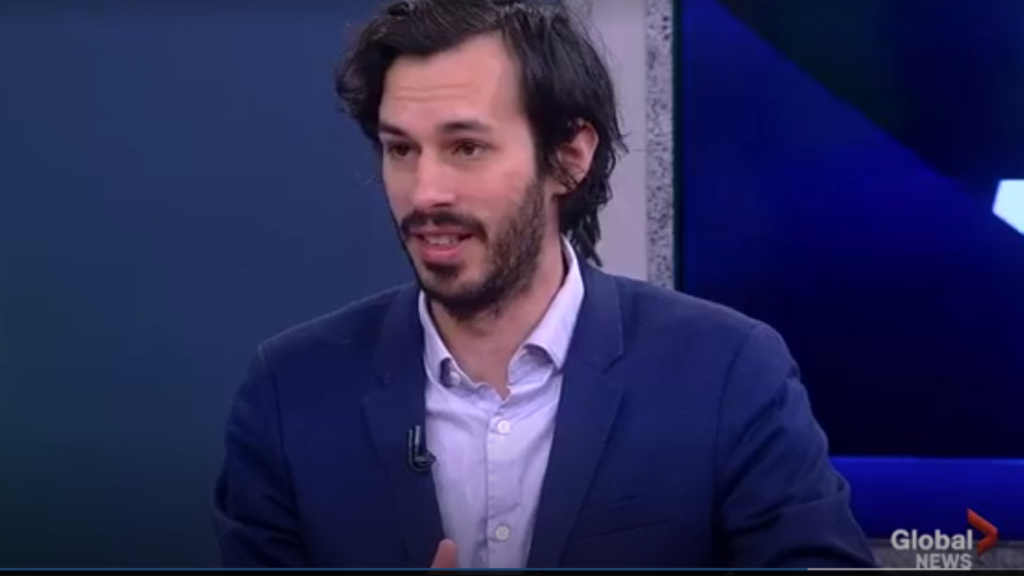
Video: Carl Miller explains online disinformation
When Carl Miller visited Halifax on March 6 to deliver a lecture as part of PPF's Digital Democracy 101 series, he stopped by Global News Morning to explain some of the challenges to democracy posed by cyber warfare, deepfakes and other kinds of disinformation.